The warning appeared quietly, wrapped in technical language and steady reassurances
The warning appeared quietly, wrapped in technical language and steady reassurances.
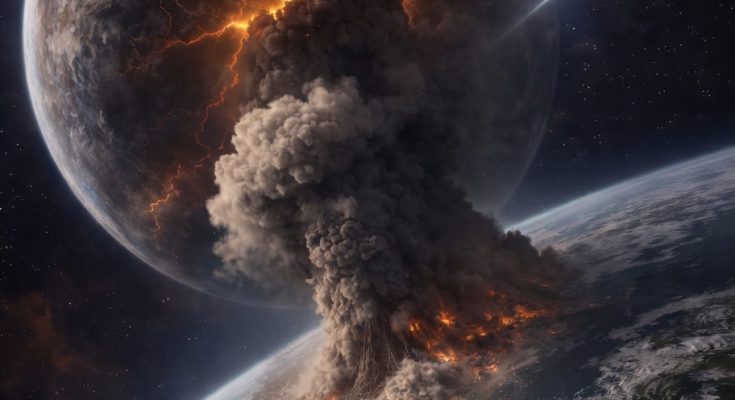
The warning appeared quietly, wrapped in technical language and steady reassurances
The warning appeared quietly, wrapped in technical language and steady reassurances.
For a while, it sounded routine—another cosmic visitor passing nearby.
But when size estimates slipped out, the tone shifted.
A mountain of rock was heading toward our orbital neighborhood, officially
“no real danger,” yet large enough to alter the course of human history if it ever struck.
The object is known as 52768 (1998 OR2), a cold, numerical label for something immense.
Estimated between 1.5 and 4 kilometers across, it belongs to the rare category of
asteroids capable of darkening skies, collapsing ecosystems, and reshaping coastlines through global impacts
asteroids capable of darkening skies, collapsing ecosystems, and reshaping coastlines through global impacts.
NASA tracks the asteroid with precise instruments, monitoring every shift in its orbit.
As it moves through space at 8.7 kilometers per second, it is expected to pass safely by Earth’s orbit on June 2nd.
Experts remain consistent in their messaging: there is no impact trajectory, no urgent threat, and no reason for public alarm.
Yet the asteroid’s close approach highlights a deeper, less comfortable truth.
Humanity’s defenses against cosmic hazards depend on early detection systems
that are still developing and on technologies that, while improving, are far from foolproof.
We rely on global coordination, political decision making, and funding that often wavers between priorities
We rely on global coordination, political decision-making, and funding that often wavers between priorities.
Even small delays could leave us vulnerable if a dangerous object were discovered too late for intervention.
This time, the calculations fall in our favor. The asteroid will pass at a distance that poses no real risk.
Its trajectory has been studied, confirmed, and monitored by multiple agencies.
But its arrival is more than an astronomical event; it’s a reminder.
Our safety margin in space is thin, maintained only by vigilance, science, and preparation.
The real story is not this particular asteroid but the question it raises: Are we ready for the one that doesn’t miss?

